AQL Inspection for Custom Bags: A Buyer’s QC Checklist
Quality & Inspection
Plan pre-shipment bag inspections with a buyer checklist for defect classes, sampling inputs, functional checks, photo reports and corrective-action records.
AQL — the acceptance quality limit — is an acceptance quality limit used to index attribute sampling plans. It is not itself a quality standard, and it is not a mandatory default for the bag industry. An AQL-based inspection plan must specify the lot size, the inspection level, the sampling scheme, the defect categories, the acceptance and rejection thresholds, and the agreed edition of the standard the plan follows. Buyer and supplier agree the actual standard version in use for each program. The current edition of ISO 2859-1 is ISO 2859-1:2026; see the official ISO page at ISO 2859-1. This article is a buyer planning checklist, not a reproduction of the standard — do not copy sampling numbers from it; derive them from the agreed standard and your lot size.
General quality checks vs AQL sampling acceptance
General quality checks — incoming material inspection, in-line checks during sewing, and final review of finished pieces — are process controls that catch defects as the bag is built. AQL sampling acceptance is a different thing: it is a statistical lot decision that accepts or rejects a finished batch based on defects found in a random sample. A clear inspection plan keeps the two separate. Incoming and in-line checks prevent defects; the AQL final inspection decides whether the finished lot is accepted. A factory can run good process controls and still have a lot fail AQL, and an AQL pass does not prove every bag in the lot is defect-free.
Inspection stages worth keeping
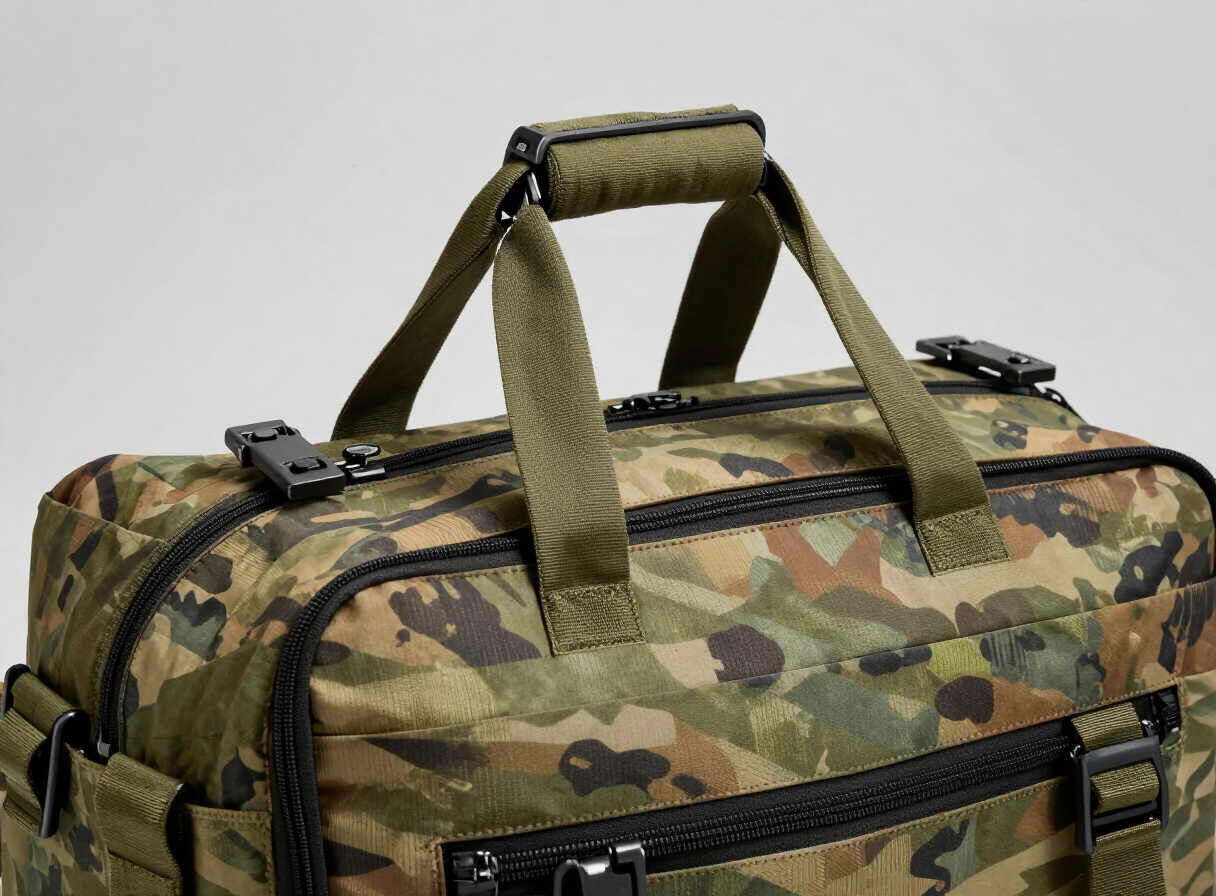
Three stages remain useful when they are defined up front. Incoming material inspection checks the fabric roll, lining, webbing, thread, zippers, and hardware against the approved bill of materials before cutting. In-line inspection checks the bag as it is sewn — seam straightness, bar-tack placement at specified stress points, dimension accuracy, and assembly order — and compares construction to the approved golden sample retained by both sides. Final random inspection (FRI) samples finished bags from the packed lot and checks each against the approved sample and the defect list. The golden sample is the reference standard for all three stages.
Inspection brief — what to agree before the lot is packed
Before inspection, agree and write down the inputs that decide the result. Use this brief as a checklist; fill it per program, not from memory.
| Brief field | What to specify |
|---|
| Lot size and SKU count | Total pieces in the lot, broken down by SKU, color, or size so the sample is drawn across the batch. |
| Spec revision | The tech pack revision number and the approved sample the lot is compared against. |
| Approved sample | The golden sample retained by both sides, with its approval date. |
| Defect categories with photo examples | Critical, major, and minor defect classes agreed for this product, each with a reference photo where possible. |
| Sampling inputs | Inspection level, sampling scheme, AQL limits, and acceptance or rejection numbers derived from the agreed standard edition and lot size. |
| Measurement method and tolerances | Which dimensions are measured, at which points, with which tool, and the tolerance for each. |
| Functional test requirements | Specific functional tests (zipper cycling, strap pull, leak, cold-hold) with method, sample size, conditions, and pass criteria — agreed separately, not assumed. |
| Packing and barcode | Carton count, marking, barcode scan, and how packed pieces are sampled. |
| Report and corrective action | Who issues the report, what it contains, and the rework and re-inspection responsibility if the lot fails. |
Defect classes are agreed by use-case risk
Critical, major, and minor defect classes are not fixed across all bag types — they are agreed for the product and its use-case risk. Depending on the foreseeable risk, a failed strap anchor may be classified as critical or major; agree the severity for the intended load and use. Agree the classification for your product in writing, with examples, rather than applying a generic list. The table below is a starting shape to fill per program, not a universal grading.
| Class | Example (agree per product) |
|---|
| Critical | A defect that could cause injury or failure in use — for example a strap anchor that separates under the agreed load on a load-bearing bag. |
| Major | A defect that affects function or appearance seriously — for example a broken zipper, a torn main seam, or a wrong color against the approved swatch. |
| Minor | A small imperfection that does not affect function — for example an untrimmed thread end that does not affect use; agree appearance limits and severity in the defect list. |
Functional tests need their own method, sample, and criteria
Functional tests — strap pull, zipper cycling, leak or cold-hold for insulated bags — are not replaced by a photo or a hand-pull. Each test is agreed separately: the method, the sample size drawn from the lot, the test conditions, and the pass or fail criteria. A hand-pull on a sample is a handling check, not a load test result. Where a load test, leak test, or cycle test is required, state it in the inspection brief with its conditions and acceptance criteria, and record the result in the report. Do not treat a passed AQL sample as proof that every bag meets a performance threshold it was never tested for. For load-bearing programs, the custom tool bags manufacturer and tactical bag manufacturer pages set up the construction details these tests check.
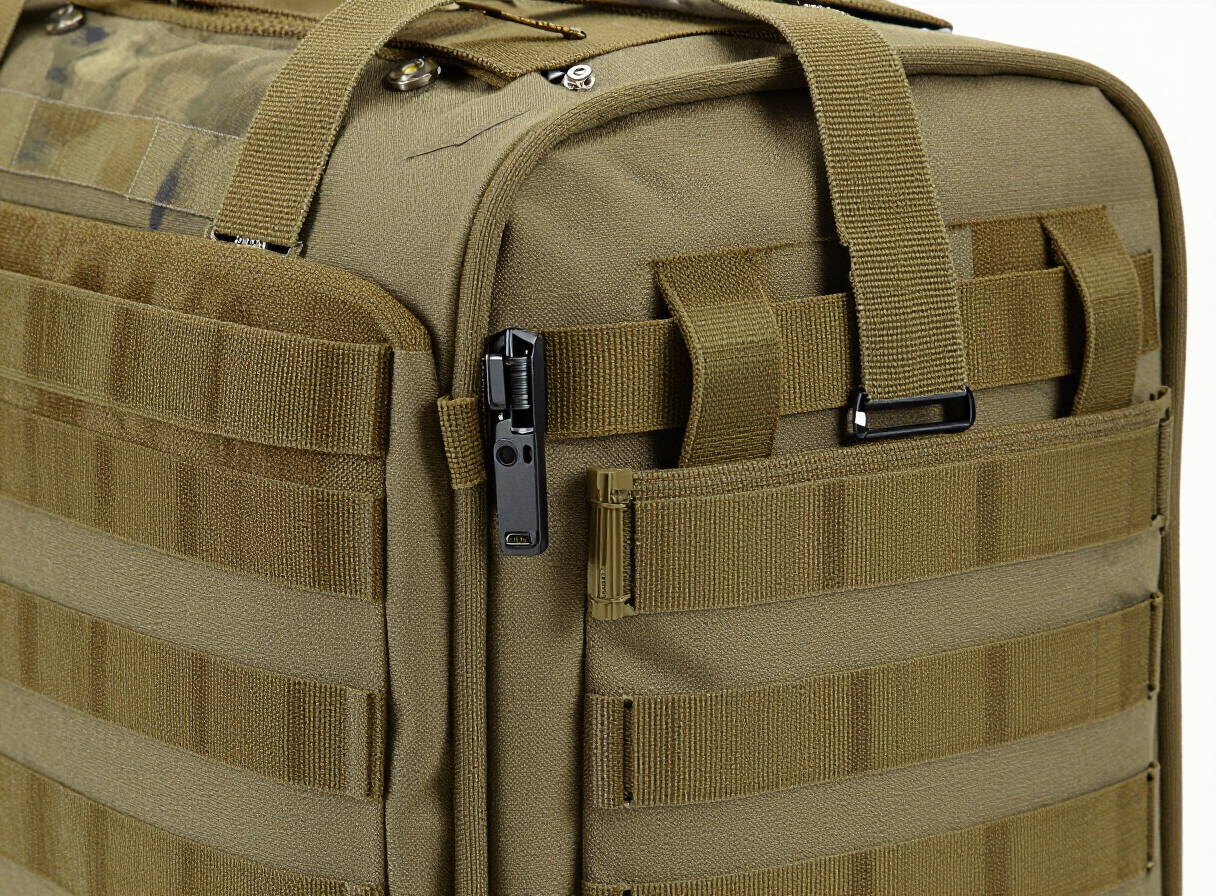
Photo reports and corrective-action records
Require a photo report before the carton is sealed so defects are caught at the factory, not at your warehouse. The report should show the lot size, the sample size, the defects found by class, and the accept or reject decision. If the lot is rejected, agree in writing who reworks, who re-inspects, and at whose cost — an inspection without a defined consequence is a report, not a control. Retain the golden sample and the report so the reorder is compared against the same reference. Related guides: How to write a custom bag specification and the custom bag sampling checklist.
To discuss your bag inspection requirements, email sales@xmronta.com — Ronta (Xiamen) Co., Ltd confirms the inspection plan with the buyer per program.
Frequently Asked Questions
What is the difference between AQL sampling and a functional test?
AQL sampling is a statistical lot decision: it accepts or rejects a finished batch based on defects found in a random sample. A functional test — strap pull, zipper cycling, leak or cold-hold — checks a specific performance attribute with a defined method, sample size, conditions, and pass criteria. A passed AQL sample does not prove every bag passes a functional test it was never run for; the two are agreed and recorded separately.
How do I set the AQL for my bag order?
Agree the inspection level, sampling scheme, AQL limits, and acceptance numbers with the supplier for the specific product, defect risk, and lot size, and state the standard edition the plan follows. AQL 2.5 for major and AQL 4.0 for minor at General Inspection Level II are widely used reference values you may select, but they are an optional example, not a fixed factory standard. Derive the actual sample size and acceptance numbers from the agreed standard, not from memory.
What happens if a lot fails AQL inspection?
A failed lot is not shipped as-is. Agree in writing before inspection who reworks the defects, who re-inspects, and at whose cost, and whether a revised sample or photo confirmation is required before the line restarts. The corrective action and re-inspection result should be recorded so the same defect class is caught earlier next time.
What should the inspection report contain?
The report should record the lot size and SKU count, the sample size drawn, the defects found by class with photos where possible, the functional test results if any were agreed, the accept or reject decision, and the corrective action if rejected. Require it before the carton is sealed so problems are caught at the factory.
Discuss Your Bag Inspection Requirements
Email: sales@xmronta.com
Browse the site: Home · Bags Manufacturing · Portfolio · Knowledge Base · FAQ · OEM & ODM Service · Contact · Our Factory