How to Write a Custom Bag Specification
Sourcing Guides
Build a clear bag tech pack covering dimensions, materials, construction, artwork, packing, tolerances and revision control for comparable OEM quotations.
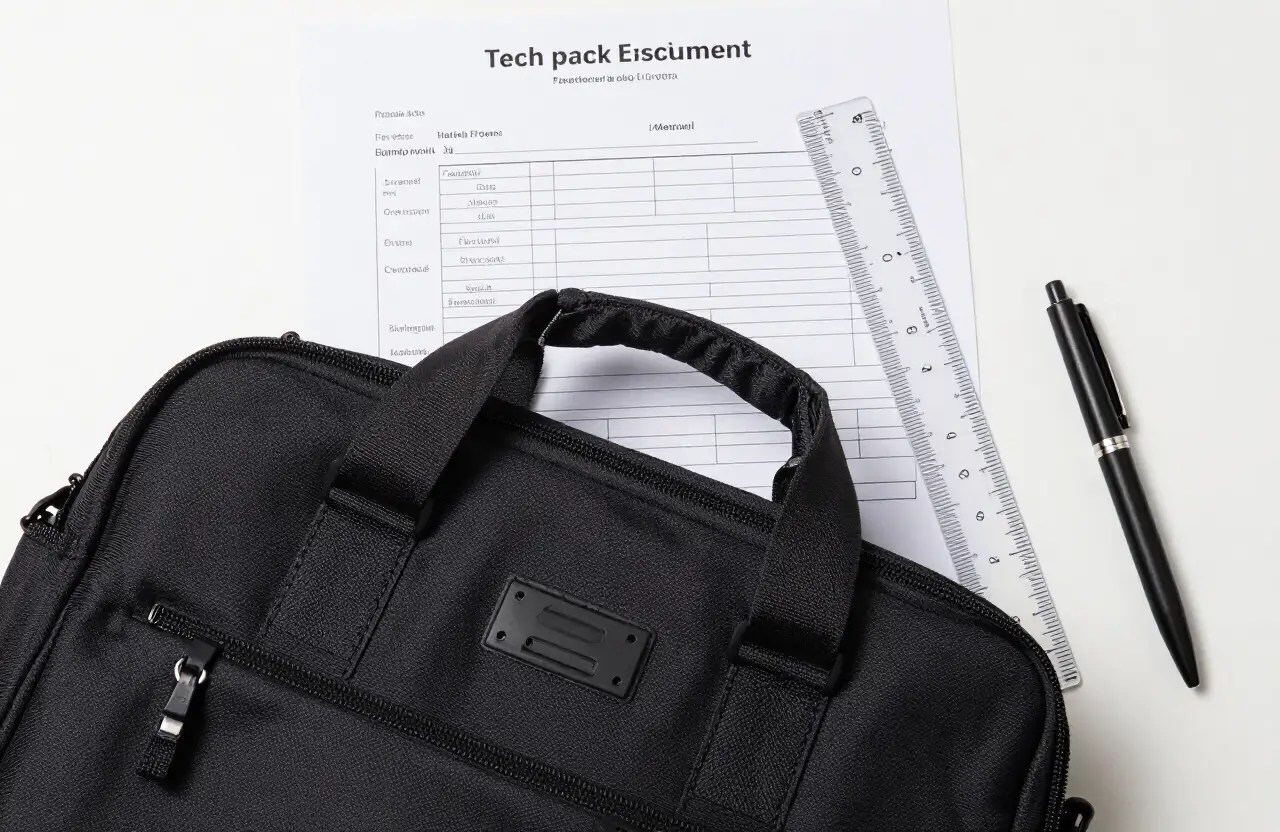
A specification is the document a manufacturer quotes and builds against. Vague words — "durable fabric," "good stitching," "comfortable straps" — are interpreted by whoever holds the sewing machine, and they produce quotes that cannot be compared. A clear specification makes every requirement measurable, gives every measurement a tolerance, and names every material by reference. This guide shows how to build one.
Start with a tech pack
The tech pack is the vehicle for specifications: a technical drawing with dimensions, a bill of materials, construction notes, artwork for branding, and packing instructions. The drawing shows the bag from every relevant view with critical dimensions — external size, compartment sizes, strap lengths, webbing widths, pocket positions. The bill of materials lists every material by name and reference. Construction notes define stitching, bar-tack positions, and seam finishing. A tech pack does not need to be beautiful; it needs to be unambiguous.
Denier and GSM measure different things
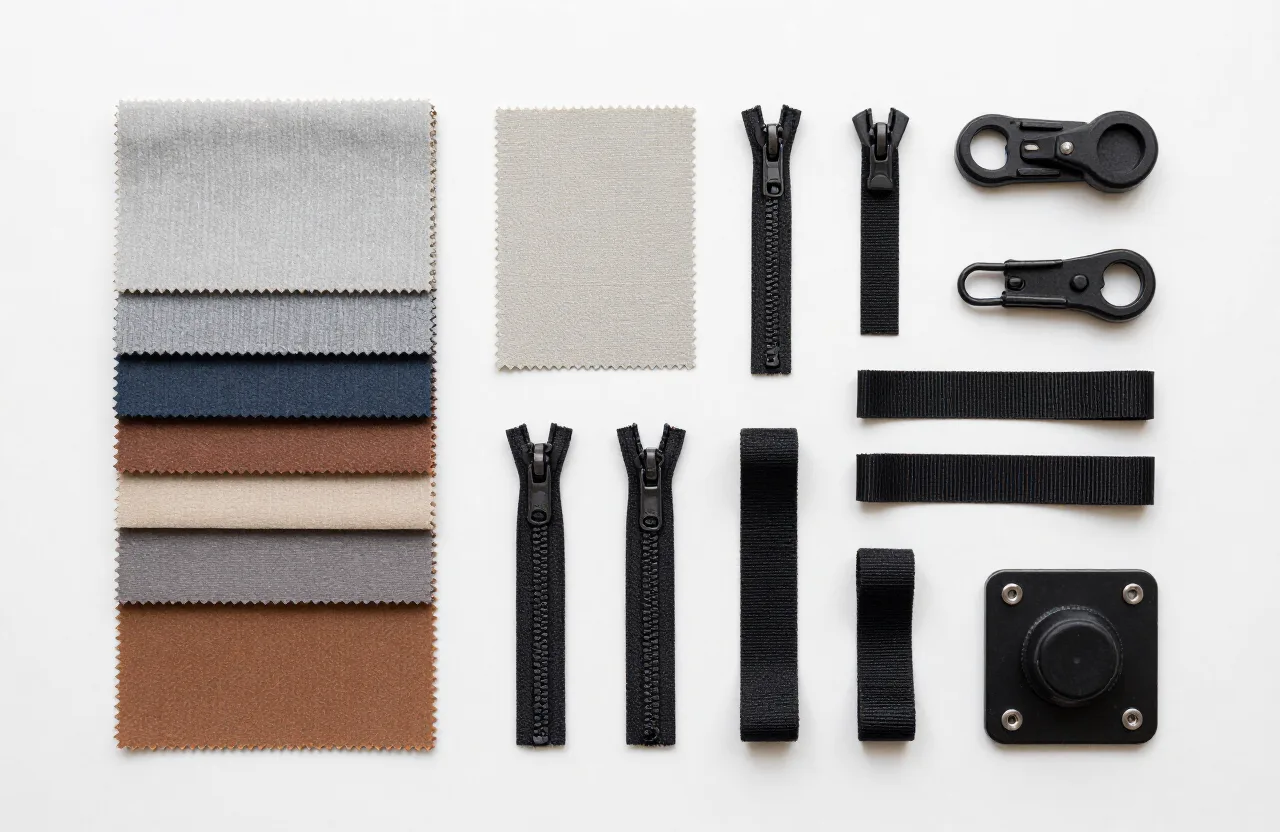
Denier measures yarn mass per unit length; GSM measures fabric mass per unit area. A 600D polyester and a 600D nylon share a yarn denier but differ in fiber, weave, coating, and finished GSM, so denier alone does not predict strength or durability. Specify the fiber, the denier, the weave, the coating, and the GSM together, and confirm the actual fabric on a swatch rather than inferring performance from the denier number.
Make every requirement measurable
Replace adjectives with parameters and a tolerance. "Water-resistant" becomes a stated coating with a test method and pass criteria; "strong zipper" becomes a named brand and size with a cycle test; "thick insulation" becomes a foam type and thickness with a tolerance. Where a standard exists, cite it — millimetres for foam thickness, stitches per inch for seam density, Pantone numbers for color. Each parameter carries a tolerance agreed for the structure and the measurement point; tolerances are not universal. Values such as 600D fabric or 8 mm foam, where shown anywhere, are illustrative — fill the actual spec from your tech pack, not from an article.
Specification brief — fields to fill
Copy this field list into a spec sheet and fill it per program. Fill each field with the values and references agreed for your project.
| Field | What to record |
|---|
| Style and revision | Style name, revision number, date. |
| Use case | What the bag carries and where it is used. |
| Contents | Items, dimensions, and weight the bag holds. |
| Dimensions and measurement points | Each critical dimension, the point it is measured at, units, and tolerance. |
| Shell | Fiber, denier, weave, GSM, coating or finish. |
| Lining and padding | Lining material, foam type and thickness. |
| Hardware | Zipper brand and size, buckles, D-rings, webbing. |
| Construction | Seam type, stitch density (per project), bar-tack positions, seam finishing. |
| Logo and artwork | Method, size, placement, artwork file, color reference. |
| Color reference | Pantone or swatch reference and Delta-E tolerance if agreed. |
| Packing | Polybag, hangtag, care label, carton count, marks. |
| Inspection requirements | Inspection level, AQL limits, functional tests with method and criteria. |
| Quantity split | Quantity by SKU, color, or size. |
| Target delivery and market | Required date and destination market. |
Turn vague claims into testable requirements
Three common vague descriptions, and how to make them verifiable. For water resistance, identify whether the requirement applies to the outer fabric or the assembled bag, then agree an appropriate test method, exposure conditions and acceptance criteria. A fabric surface-wetting result does not establish whole-bag leak resistance. "Holds 20 kg" becomes: a strap load test with stated weight, duration, sample size, and pass criteria — not a hand-pull. "Keeps ice for 24 hours" becomes: insulation type and thickness, ambient temperature, fill volume, and the cold-hold test method and pass criteria. Each requires its own test method, conditions, and acceptance criteria, agreed before production; record the agreed test method, conditions and acceptance criteria in the specification.

Details that quietly define quality
Some spec elements are easy to omit and expensive to find missing. Bar-tacks: their exact positions — strap anchors, handle attachments, webbing ends — because reinforcement placed by judgment varies across a run. Hardware: buckle and slider brand or a stated equivalent, state the hardware specification and any permitted equivalent so substitutions can be reviewed against the agreed requirements. Lining and finishing: raw-edge versus folded binding, and whether internal seams are overlocked. Packing: polybag per piece, inner carton count, carton dimensions and gross weight, and carton marking. Thread type is specified per project; do not assume one thread type is always worse than another without a reason tied to the use case.
Run a written approval loop
A specification is only as strong as its approval process. The loop: the manufacturer returns a written spec confirmation stating each parameter it will meet and flagging any it cannot; a pre-production sample is built to the spec and signed by both parties as the physical reference; the finished lot is compared against the signed sample and the tech pack revision at inspection. Every change after the signed sample is issued as a numbered revision with its cost and lead-time impact stated in writing. This loop is what prevents spec drift — the slow accumulation of small substitutions that turns an approved sample into a different product by ship date.
Revision log — fields only
Keep a revision log so changes are traceable. The fields are revision number, date, what changed, who requested it, cost impact, lead-time impact, and approval. The row below shows the fields, not a real order.
| Rev | Date | Change | Requested by | Cost impact | Lead-time impact | Approved |
|---|
| — | — | — | — | — | — | — |
Related guides: the custom bag sampling checklist covers how a sample is approved against the spec, and the AQL inspection checklist covers how the finished lot is accepted. For category examples, see the cooler bags manufacturer and OEM backpack manufacturer pages.
To review your bag specification with our team, email sales@xmronta.com — Ronta (Xiamen) Co., Ltd replies with a spec confirmation, sampling plan, and quotation.
Frequently Asked Questions
How do I start without a complete tech pack?
Start with the fields you can fill: use case, contents, dimensions, and the materials you know. Send what you have and let the manufacturer propose the rest, then lock the full spec before the pre-production sample. A partial spec is a starting point; a signed pre-production sample is the reference bulk is built to.
What is the difference between denier and GSM?
Denier measures yarn mass per unit length; GSM measures fabric mass per unit area. They measure different things: two fabrics of the same denier can have different GSM, fiber, weave, and coating, and therefore different strength. Specify fiber, denier, weave, coating, and GSM together, and confirm on a swatch.
How do I set tolerances?
Set a tolerance for each dimension based on the structure, the measurement point, and the measurement method — not a single universal figure. A body panel, a gusset, and a strap length may each carry a different tolerance. State the tolerance in the tech pack and confirm it on the sample, because manufacturing to zero tolerance is impossible and a spec without tolerance invites either rejection of good product or acceptance of bad.
How is a substitute material approved?
If a component must be substituted, the substitute is listed in writing with the reason, and the bulk material is confirmed before the pre-production sample is released. The signed pre-production sample must contain the actual bulk materials; a sample in substitutes is not a reliable bulk reference. Any later change is a numbered revision with its cost and lead-time impact stated.
Review Your Bag Specification
Email: sales@xmronta.com
Browse the site: Home · Bags Manufacturing · Portfolio · Knowledge Base · FAQ · OEM & ODM Service · Contact · Our Factory